Europe in November: 5 Cities Worth Visiting After the Summer Rush
Europe in November: 5 Cities Worth Visiting After the Summer Rush
Oct 19,2026
|
Milo
At 6:13 PM on 15 November the sun sets in Seville. In Vienna it is gone by 4:16 PM. That two-hour gap shapes your days more than the temperature difference does, and it is why "Europe in November" is really several different trips.
The summer crowds have thinned by then, though not everywhere and not completely. Seville Cathedral enforces capacity limits, and St John's Co-Cathedral in Valletta staggers or limits the number of visitors inside. What changes is the kind of trip each city gives you. Here are five that work, and what to plan around in each.
The short version. Seville for long daylight and lots of walking outside. Valletta for the warmest average days, with a jacket for the rain. Palermo for food. Porto if you can enjoy a city in the wet. Vienna only if Christmas markets are the reason you're going.
November Weather and Daylight in Europe at a Glance
These are long-term averages plus sunrise and sunset for 15 November 2026. Use them as a planning baseline, not a forecast.
City
Average daytime high / nighttime low
Average rainy days in November
Sunrise / sunset, 15 Nov
Seville, Spain
20.2°C / 10.0°C
About 6–7
8:03 AM / 6:13 PM
Palermo, Italy
Around 19–20°C / 13–14°C
Around 8 (regional estimate)
6:47 AM / 4:54 PM
Valletta, Malta
20.8°C / 15.0°C
About 12
6:38 AM / 4:54 PM
Porto, Portugal
16.8°C / 9.5°C
About 12
7:22 AM / 5:15 PM
Vienna, Austria
8.8°C / 3.7°C
About 8
7:01 AM / 4:16 PM
Reference periods differ by location, Palermo's range is approximate, and values are rounded.
Read the last column first. Palermo and Valletta are mild, but both lose the light at 4:54 PM, almost an hour and a half before Seville does. Valletta also has the warmest nights (15.0°C) and, with Porto, the most rain.
Seville in November: A Day Built Around the 6:13 PM Sunset
With highs near 20°C, Seville is the one city here where you can spend most of the day outdoors and still eat dinner outside if the evening allows. Evenings are noticeably cooler, so the order of your day matters. This is the sequence that keeps the timed tickets and the daylight on your side:
9:30 AM, Royal Alcázar. Book the earliest slot you can get. Third-party guides report shorter winter hours (October to March, closing around 5 PM) and tickets that sell out weeks ahead in busy periods, so confirm both on the Alcázar's own site.
12:30 PM, Plaza de España and María Luisa Park. Do the open-air sights while the sun is high.
2:30 PM, late lunch in Santa Cruz. Tapas rather than a set menu leaves you room for the afternoon.
4:00 PM, Cathedral and Giralda. The cathedral's official schedule and rates page lists Monday to Saturday opening from 10:45 AM to 7:00 PM, with the ticket office closing at 6:00 PM, and allows about 75 minutes for the visit. On Sundays it opens at 2:30 PM. General admission is €13 online or €14 at the ticket office (rates effective 1 January 2026).
6:13 PM, sunset. Cross the river to Triana for dinner.
Worship services can change the cathedral's hours without notice, so look at the agenda for your date.
Palermo in November: Eat First, Sightsee Second
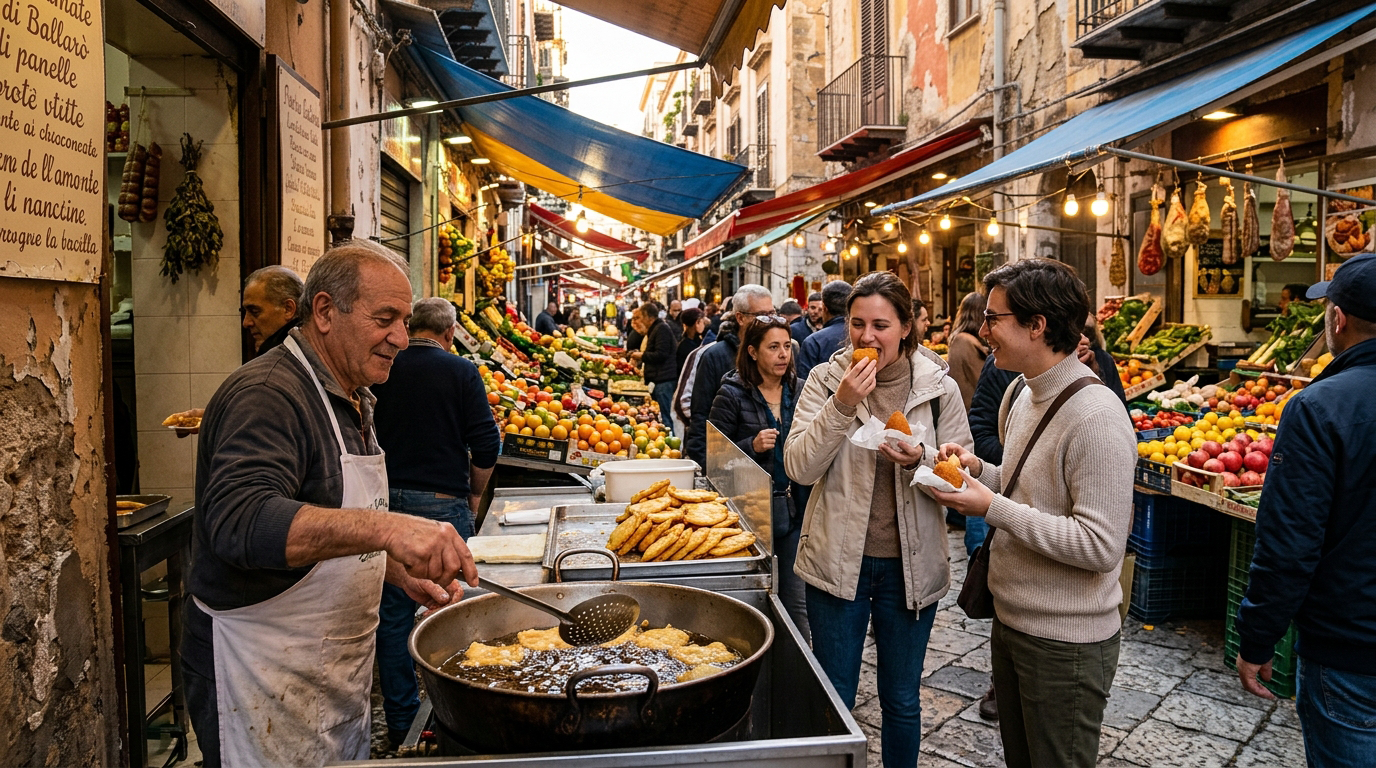
Tasting panelle at Ballarò market.
Palermo rewards people who wander with an appetite.
Start at the Ballarò market and eat standing up: panelle (chickpea fritters) and arancine (fried rice balls) are the Sicilian street-food basics. Most of what makes the city memorable happens between the landmarks, in the market lanes and the cafés, not in front of any one monument.
Palermo Cathedral and the Norman Palace give the city's layered history some structure, and they double as your indoor fallback. Regional estimates put November rain at around eight days, and the sun sets at 4:54 PM, so a simple rule works: markets in daylight, churches and palaces when it rains.
This is not a beach month, and we wouldn't plan it as one. It is a good month for a city that stays interesting whether the forecast holds or not.
Valletta in November: Small Enough to Plan by the Hour
On paper Valletta is the warmest of the five, with an average high of 20.8°C. It is also one of the two wettest, so keep a jacket in your bag and treat the sun as a bonus.
The city is compact enough to cover on foot. The one place that needs real planning is St John's Co-Cathedral, home to Caravaggio's paintings and an ornate interior. These are the details from its official visitor page:
Detail
What the official page says
Opening hours
Monday to Saturday, 9:00 AM to 4:45 PM
Last admission
4:00 PM, which leaves 45 minutes before closing
Sundays and public holidays
Closed
Adult ticket
€15 (seniors and students €12)
Time to allow
About 1 hour 45 minutes
Bags
Small bags only; no lockers on site
Sunset is at 4:54 PM, so go in the morning and keep Upper Barrakka Gardens for the end of the day. It is a working church: bring something to cover your shoulders and leave stilettos at the hotel. If the sea is calm and you have an extra half day, the ferry to the Three Cities adds a look at Malta's maritime history.
Porto in November: Good in the Rain, If You Pack for It
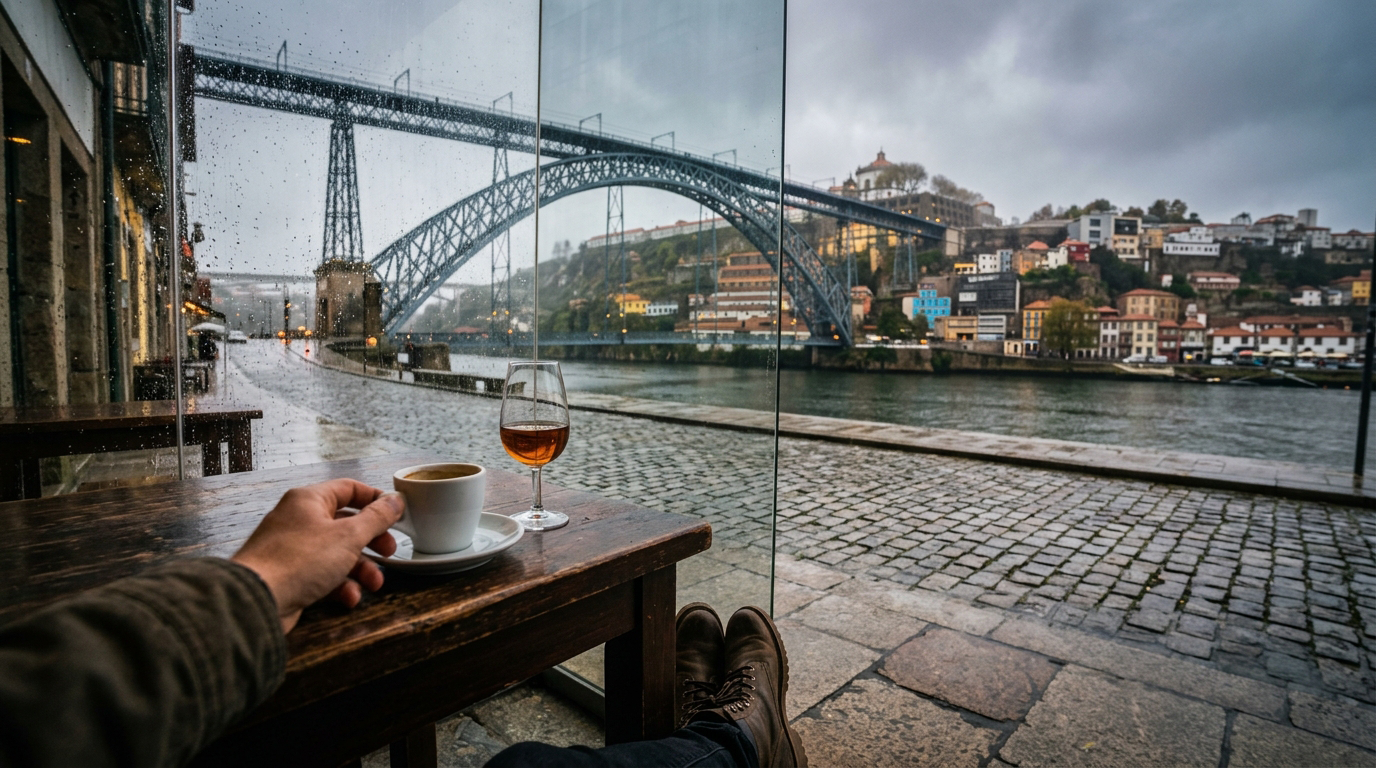
Waiting out the rain by the Douro River.
Porto is the pick for people who like a city better with a coffee in hand and a roof overhead. IPMA's climate normals record around 167 mm of November rain and about 12 days with at least 1 mm, so the weather will probably take part in your trip.
Dry hours go to the Ribeira district, the Douro riverside and the walk across the Dom Luís I Bridge. When it pours, São Bento Station's azulejo panels cost you nothing but a few minutes, and a port cellar in Vila Nova de Gaia fills an afternoon. Check each cellar's hours and tour availability before you cross the river.
One practical point outweighs any sightseeing list: the hills and cobbles get slick. Shoes with grip first, itinerary second.
Vienna: When Each 2026 Christmas Market Opens
Vienna is cold in November (average high 8.8°C, low 3.7°C) and dark by 4:16 PM. The markets help with that: most stay open until 9 or 10 PM, so the short days cost you less here than the numbers suggest. Opening dates are what matter. These come from the Vienna Tourist Board's market listing:
Market
2026 dates
Daily hours
Schönbrunn Palace
6 Nov to 6 Jan 2027
10 AM to 9 PM
Stephansplatz
6 Nov to 26 Dec
11 AM to 9 PM
Rathausplatz (Viennese Christmas Market)
13 Nov to 26 Dec
10 AM to 10 PM
Am Hof
13 Nov to 23 Dec
Mon to Thu 11 AM to 9 PM; Fri to Sun 10 AM to 9 PM
Spittelberg
13 Nov to 23 Dec
Mon to Fri 2 PM to 9:30 PM; Sat and Sun 11 AM to 9:30 PM
Freyung
14 Nov to 23 Dec
10 AM to 9 PM
Arrive in the first week of November and, among the markets on that list, only Schönbrunn and Stephansplatz are open. The main weekend is 14 to 15 November, the first one with Rathausplatz and most of the others running. Maria-Theresien-Platz and the Belvedere market wait until Friday 20 November.
Spend the lit-up hours at the markets and the early part of the day on the historic center, St. Stephen's Cathedral or a museum. Coffeehouses are the afternoon plan, whatever the weather.
Choosing One City, or Two Neighbors
These five are alternatives, not a route. They stretch from Iberia to central Europe, and a trip that tries to include all of them spends its days in transit. Seville and Porto share a peninsula, Palermo and Valletta sit in the central Mediterranean, and Vienna stands alone.
Check before you book. Hours, prices and market dates here come from the official pages of Seville Cathedral, St John's Co-Cathedral and the Vienna Tourist Board, checked on 16 October 2026. All three change, so confirm them for your dates.
When you compare transport between two cities, compare door-to-door time rather than ticket price: airport transfers, waiting and luggage rules can turn a cheap flight into the slower option. With sunsets between 4:16 PM and 6:13 PM, that time also decides whether a day trip leaves any daylight at the other end.
Mobile Data for a Multi-Country Trip
Crossing borders is when mobile data matters most: platform changes, digital tickets, a map when the rain starts. Our Europe eSIM Lite covers 42 destinations, including all five countries in this guide: Spain, Italy, Malta, Portugal and Austria. It is a data-only eSIM with no phone number, so keep your regular SIM for calls and texts. If your route might stretch beyond those 42, the 57-country Europe eSIM covers more destinations.
If you want a phone number as well, Europe (45 Countries) with UK number could be a good choice. Setup is short, and the install is best done before you fly:
TRAVEL ESSENTIAL
Europe eSIM Lite
One eSIM for 42 destinations, including Spain, Italy, Malta, Portugal and Austria. Data only: install it on Wi-Fi before you fly.
It is for city breaks built around indoor culture, food and, in Vienna, Christmas markets. It suits beach or hiking trips poorly. Sunset ranges from about 4:16 PM in Vienna to 6:13 PM in Seville, and some attractions, such as St John's Co-Cathedral in Valletta, close on Sundays, so check hours for the day you plan to go.
Which European cities are warmest in November?
Of the five cities in this guide, Valletta (average high 20.8°C, low 15.0°C) and Seville (20.2°C / 10.0°C) are warmest, followed by Palermo at around 19–20°C by day. Porto averages 16.8°C and Vienna 8.8°C. These are long-term averages, not a forecast for your dates.
Can one eSIM work across multiple European countries?
Yes, if the plan lists every country on your route. Our Europe eSIM Lite covers 42 destinations, including Spain, Italy, Malta, Portugal and Austria, and it switches to a local network as you cross borders. It is data-only, so check the coverage list and your phone's eSIM support before buying.
Pick the city first, then prioritize the booking that shapes your day: the Royal Alcázar or Cathedral in Seville, St John's in Valletta, or the weekend that suits Vienna's Christmas markets.