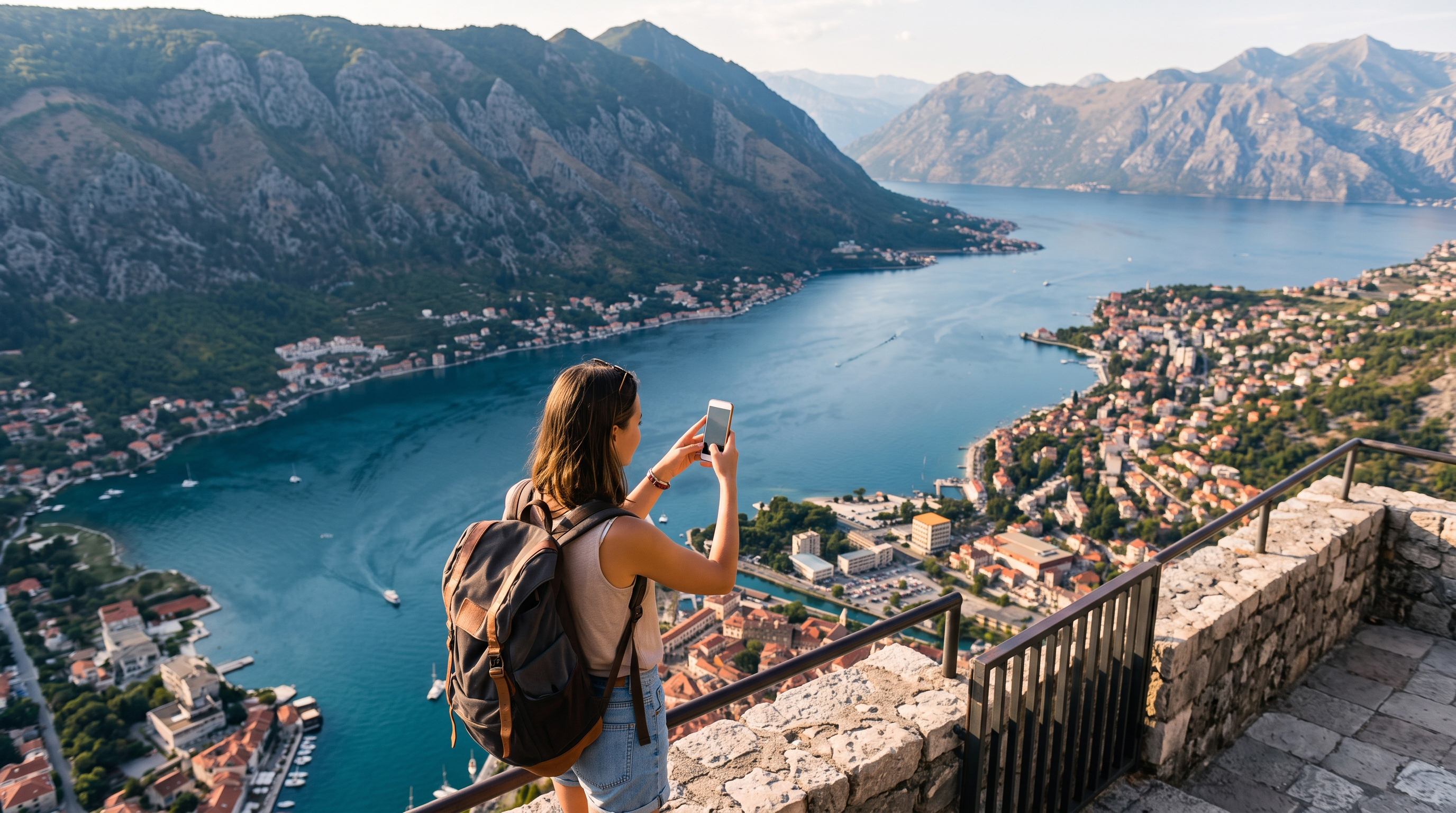
Your phone will almost certainly connect the moment you land in Montenegro. Whether that connection is free is a completely different question, and the honest answer is: it depends entirely on which carrier issued your SIM.
Montenegro sits inside Europe geographically, but it isn't part of the EU's Roam Like at Home zone. If you're arriving from an EU country, don't assume your usual European allowance just carries over the border. Some carriers extend their own international plans to cover Montenegro anyway — but that's a carrier choice, not an EU rule.
Here's what actually determines your cost, and what changed most recently.
Does Roaming Even Work There?
Yes, in the sense that your phone will find a network. Whether your carrier bills you for using it is a separate matter, and it depends on whether they have a roaming agreement with a Montenegrin operator and what that agreement includes.
The mistake most travelers make is asking "does roaming work in Montenegro?" when the real question is "what does my specific plan say about Montenegro?" Coverage and cost are two different things, and only one of them shows up on a network bar.
Is Montenegro Part of EU Roaming? Not Yet.
The EU's Roam Like at Home area currently covers the EU itself, the European Economic Area countries — Iceland, Liechtenstein and Norway — plus Moldova and Ukraine. Montenegro isn't on that list, according to the Council of the European Union's own press release.
That could change. On 4 June 2026, the Council of the European Union approved opening negotiations with Albania, Bosnia and Herzegovina, Kosovo, Montenegro, North Macedonia and Serbia, aiming to extend Roam Like at Home to those six partners. Worth reading the wording carefully: this is authorization to negotiate, not a completed accession. Each country still has to align with the EU's roaming rules before it can join, and there's no published date for when that happens.
So if you're planning a 2026 or 2027 trip, treat "negotiations opened" as background context, not a green light to stop checking your plan.
What Roaming Actually Costs
There's no single number here, and any article that gives you one flat figure is oversimplifying. A few concrete examples, checked directly against operator pages:
Verizon (US)
Verizon's TravelPass runs $12 per day across 210+ countries and destinations, added on top of whatever plan you already have. Montenegro falls under this general international list rather than getting a special rate.
Three (UK)
This one's had a recent price change, so if you've seen an older figure floating around, update it. According to Three's own Go Roam page, customers who joined or upgraded on or after 18 December 2025 pay £8 per day for Go Roam Around the World Extra destinations — the group Montenegro sits in — effective from 1 April 2026, with Three noting the rate is reviewed annually. Older accounts on legacy pricing may still see £5 or £7; check your own plan rather than trusting a screenshot from last year.
Everyone else
The range in between is wide. Some plans include Montenegro at no extra charge (like the EE example above), some charge a flat daily fee (like Three), some bill by usage. There genuinely isn't a shortcut around checking your own carrier's page.
| What to check | Why it matters |
|---|---|
| Is Montenegro named specifically? | "Europe" on a map isn't the same as "Europe" in a roaming policy |
| Daily pass vs. pay-as-you-go | A pass is easier to budget for a short trip |
| High-speed data cap | Even "unlimited" plans often throttle after a limit |
| Calls and texts included? | Data coverage doesn't guarantee voice or SMS is included |
| Does the pass auto-renew? | Matters if you're staying more than a few days |
| Coverage in neighboring countries | Relevant for anyone doing a Balkan road trip |
Your Three Real Options: Home SIM, Local SIM, or Travel eSIM
Keep your home SIM
Simplest option: same number, nothing to buy. Makes sense if your carrier already covers Montenegro reasonably, or the trip is short enough that even a daily fee stays cheap. Falls apart fast if your carrier doesn't include Montenegro and charges pay-as-you-go rates.
Buy a local SIM or eSIM
Montenegro's domestic operators sell large-data tourist packages, and the pricing across all three is close enough to be a coin flip:
- m:tel's Turist 15 package costs €15 for 500GB of data over 15 days, with a longer Turist 20 option at €20 for 1TB over 30 days, plus a Western Balkans roaming allowance (roughly 8–10GB depending on the source) added on first top-up.
- One Montenegro's tourist packages sit in the same range — around €15 for 500GB over 15 days — with a smaller regional allowance for Western Balkans travel.
- Crnogorski Telekom's €15 tourist package also gives 500GB over 15 days, plus roughly 9GB usable across the Western Balkans and Croatia.
The catch with any local SIM: it usually means swapping your physical card (unless you're on eSIM), and Montenegrin law requires ID registration for prepaid SIMs.
Use a travel eSIM
It's rarely the cheapest option on paper — local operators' 500GB packages are genuinely hard to beat on price per gigabyte. What you're paying for instead is not having to think about it: order it before you fly, install it on Wi-Fi at home, and it's already sitting on your phone when you land. Your main number stays put for calls, the eSIM handles data. That trade-off tends to matter more on a trip that crosses several borders than on a single stretch of coastline.
Our own Montenegro eSIM runs on the MTEL network and works this way: no ID or passport needed, delivered by email and through the ByteSIM app right after purchase, and set up to activate automatically once you land — you don't need to time it to a specific date. It's data-only, so it won't replace a phone number, but it does support hotspot sharing if you need to get a laptop online too. Plans range from small daily allowances up to unlimited, in case a quick coastal trip turns into a longer stay in Kotor or Budva than you planned.
The Western Balkans Complication
Montenegro, along with Albania, Bosnia and Herzegovina, Kosovo, North Macedonia and Serbia, is part of a separate Western Balkans Regional Roaming Agreement — its own system, distinct from EU Roam Like at Home. This is exactly the mechanism behind those "Western Balkans data allowance" line items you'll see on local tourist SIM packages.
Three different systems, easy to mix up:
None of these automatically implies the others.
Croatia → Montenegro: Where People Get Caught Out
If your itinerary runs Croatia to Montenegro — a common coastal road trip — this is the exact border where your roaming situation can flip without warning. Your EU/EEA-based plan works normally in Croatia, then stops applying the moment you cross south. Same logic applies continuing on to Albania, Serbia, or Bosnia and Herzegovina: check each leg separately rather than assuming one plan covers the whole loop.
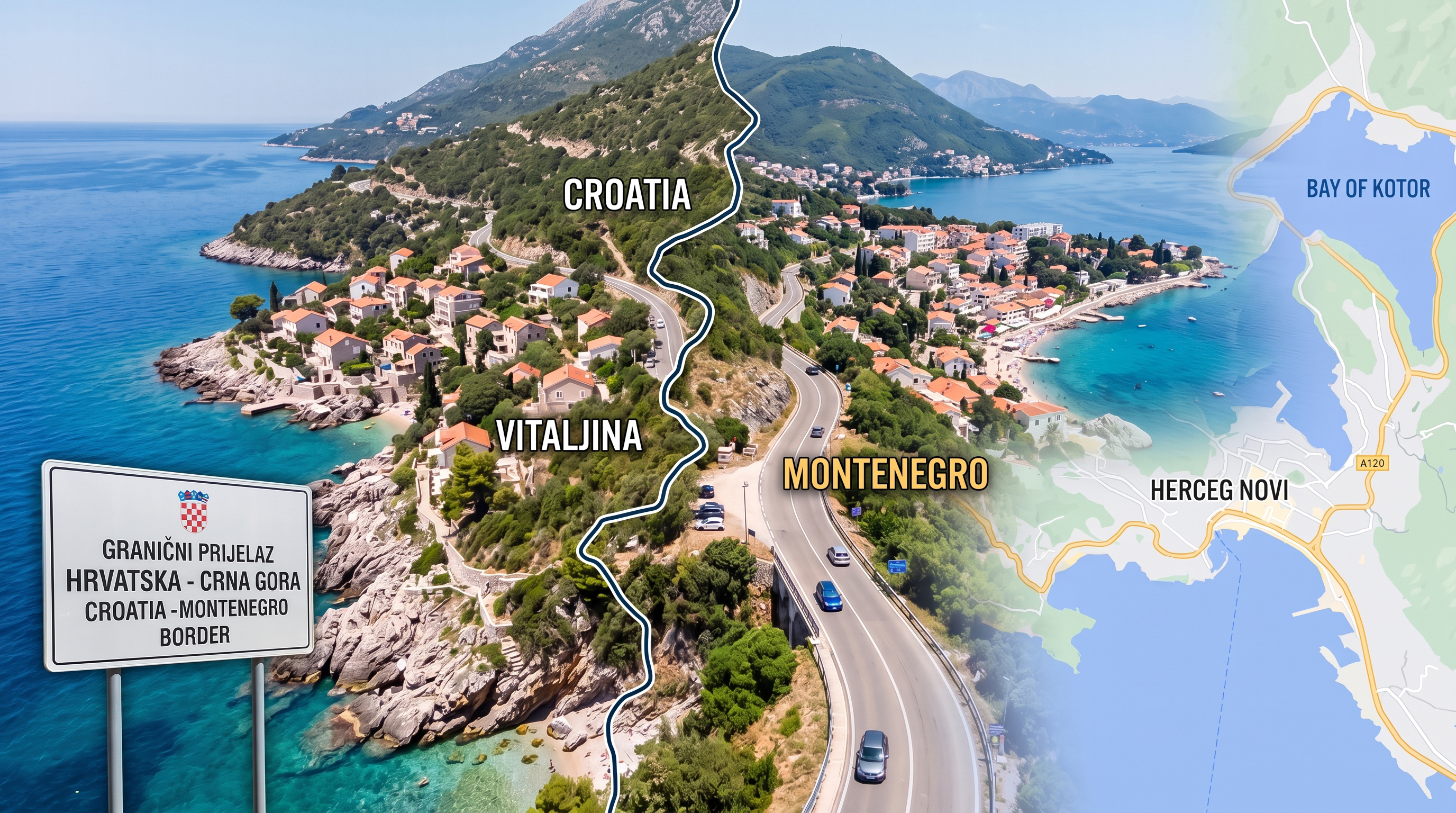
Coming from Italy instead of Croatia? The same rule applies once you leave the EU behind, and our Italy roaming guide covers what your plan does on the Italian side before you head across the Adriatic.
Avoiding Surprise Charges
You don't need to switch your phone to airplane mode for the whole trip. You do need to know, before you land, what your specific plan says about Montenegro by name — not about "Europe" in general.
If you're running a travel eSIM alongside your home SIM, double-check which line is set as the default for data, so your primary SIM doesn't quietly pick up cellular data on its own. And if you're arriving by cruise ship: maritime networks are billed completely differently from land-based roaming, so don't assume your normal roaming rate applies at sea.
Frequently Asked Questions
Is Montenegro part of the EU roaming zone?
Not currently. Negotiations to extend Roam Like at Home to Montenegro and five other Western Balkan countries were authorized in June 2026 (see the EU Council section above), but there's no confirmed date for when — or whether — that concludes.
Can I use my regular SIM in Montenegro?
Usually, yes, if your carrier has a roaming agreement there. Whether it's free or billed separately depends entirely on your specific plan.
Is roaming expensive in Montenegro?
It varies enormously by carrier — anywhere from included at no extra cost (some EE plans, as above) to a flat daily fee (Three's £8/day) to pay-as-you-go rates that add up fast. Check your own plan rather than a number from a forum post.
Can I buy a local SIM or eSIM there?
Yes — m:tel, One, and Crnogorski Telekom (all linked above) sell tourist packages, generally around €15 for 500GB over 15 days, with eSIM options on compatible phones.
Is Western Balkans roaming the same as EU roaming?
No. They're two entirely separate systems. Montenegro is part of the Western Balkans regional agreement; it isn't yet part of EU Roam Like at Home.
Do I need a travel eSIM specifically?
No. It's one option among a few — useful mainly for convenience and multi-country trips, and for skipping the ID registration a local SIM requires, but not because it's the only way to get connected.
Skip daily roaming charges with a prepaid Montenegro eSIM. Install it before your trip and use it for mobile data as soon as you land — no ID, no shop, no waiting at Tivat airport.
View Montenegro eSIM→
Before buying any travel eSIM, check the plan's coverage, data allowance, validity period, and hotspot rules. The cheapest-looking plan is not necessarily the right one if you're going to use a lot of data.