

Busan, South Korea's second-largest city, combines scenic beaches, coastal temples, traditional markets, and vibrant neighborhoods. From the colorful streets of Gamcheon Culture Village to the ocean views at Haeundae Beach and Gwangalli Beach, the city offers a mix of cultural experiences, local food, and seaside relaxation. For first-time visitors, planning a trip to Busan means choosing the right attractions, finding a convenient place to stay, and understanding how to get around the city. This guide covers the top attractions, best areas to stay, transportation options, and practical travel tips to help you plan a smoother Busan trip.

Best Things to Do in Busan
Busan offers a mix of coastal scenery, cultural landmarks, traditional markets, and lively nightlife. To make the most of your visit, group nearby attractions together and allow extra travel time for destinations outside the city center.
Relax at Busan's Best Beaches
- Haeundae Beach: One of Busan's most famous beaches, ideal for seaside walks, summer activities, and exploring nearby restaurants and cafés. It is also a convenient base for visiting attractions in eastern Busan.
- Gwangalli Beach: Known for its views of Gwangan Bridge, this beach is especially popular in the evening. The surrounding area has plenty of cafés, restaurants, and bars, making it a good choice for a relaxed night out.
Travel tip: Visit Haeundae during the day and Gwangalli after sunset if you want to experience both beaches without rushing.
Explore Colorful Neighborhoods and Local Markets

- Gamcheon Culture Village: Famous for its colorful hillside houses, murals, and narrow alleyways, this neighborhood is ideal for photography and a leisurely walk. Expect steep slopes and stairs, so comfortable shoes are recommended.
- Jagalchi Fish Market: One of Korea's best-known seafood markets, offering a glimpse into Busan's fishing culture. Visitors can browse fresh seafood and find places to enjoy locally prepared dishes.
- Nampo-dong: A lively shopping and dining district near BIFF Square and Gukje Market. It is a convenient area to explore street food, traditional shops, and local specialties in one outing.
Travel tip: Gamcheon Culture Village and the Nampo-dong area work well together in a western Busan itinerary, although you should allow time for the connecting bus or taxi ride.
Visit Coastal Temples and Scenic Attractions

- Haedong Yonggungsa Temple: Set beside the sea, this Buddhist temple offers a distinctive coastal setting. It is particularly appealing to visitors interested in architecture, photography, and quieter cultural experiences. Reaching it usually requires a bus or taxi from nearby transit connections.
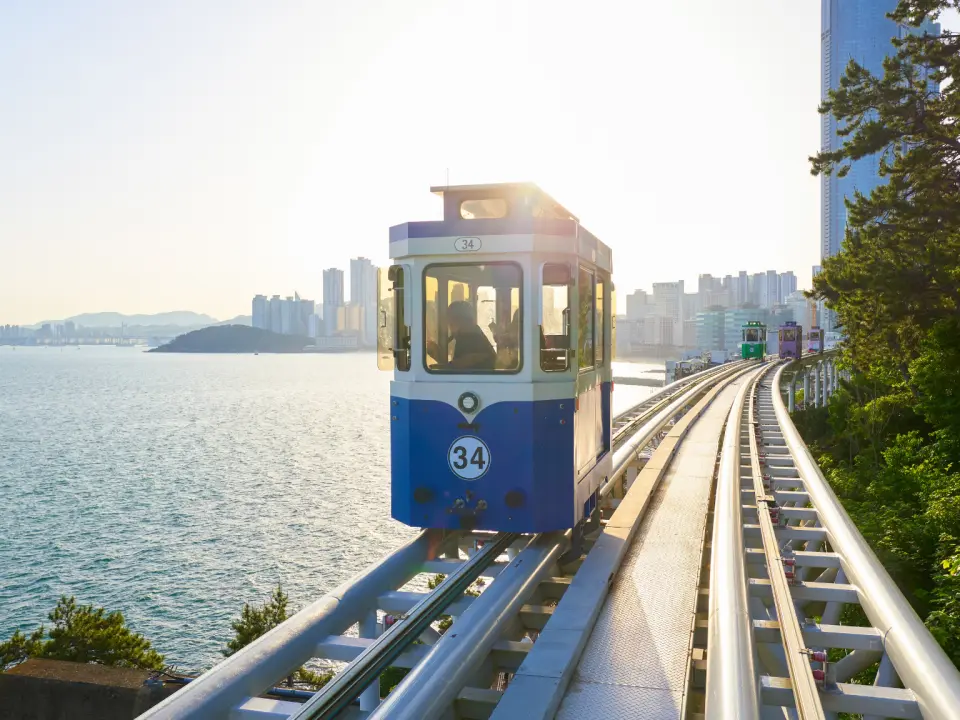
- Haeundae Blueline Park: This coastal attraction features the Beach Train and Sky Capsule along a scenic section of the old railway near Haeundae. The Sky Capsule is especially popular for its elevated ocean views, so advance reservations are worth considering during busy periods.
Travel tip: These attractions are in eastern Busan but are not right next to each other. Check transit connections before visiting both on the same day.
Enjoy Busan After Dark

- Gwangan Bridge night views: Head to Gwangalli Beach to see the illuminated bridge reflected over the water.
- Seaside cafés and restaurants: Explore Gwangalli or Haeundae for ocean-view dining, coffee, and evening walks.
- Local food experiences: Try Busan specialties such as dwaeji-gukbap (pork and rice soup), milmyeon (wheat noodles served cold), and fresh seafood.
Check current event schedules if you want to catch a special light show or seasonal nighttime event, as dates and operating arrangements can change.
Where to Stay in Busan
Choosing the right area to stay in Busan can save time and make sightseeing easier. The city's main attractions are spread across different districts, so consider your itinerary, preferred activities, and access to public transportation before booking accommodation.
1. Haeundae: Best for Beach Lovers
Haeundae is a popular choice for travelers who want to stay near the beach. The area offers seaside walks, restaurants, cafés, and convenient access to Haeundae Blueline Park. It works particularly well for beach-focused trips and visits to eastern Busan.
Best for: Beach holidays, couples, families, and travelers seeking a resort-style atmosphere.
2. Seomyeon: Best for First-Time Visitors
Located at a major subway interchange, Seomyeon is a practical base for exploring different parts of Busan. It has a wide range of restaurants, shopping streets, nightlife, and accommodation options. Although it is not by the sea, its central location makes it easier to reach many major districts.
Best for: First-time visitors, food lovers, shoppers, and travelers who prioritize transportation convenience.
3. Gwangalli: Best for Night Views and Seaside Dining
Gwangalli is known for its beachfront restaurants, cafés, and views of Gwangan Bridge. Compared with Haeundae, the area offers a different coastal atmosphere, with plenty of options for evening dining and nightlife.
Best for: Couples, friends traveling together, and visitors who enjoy ocean views and evening activities.
4. Nampo-dong: Best for Markets and Local Culture
Nampo-dong is a convenient base for exploring Busan's traditional markets, shopping streets, and historic downtown attractions. Jagalchi Fish Market, BIFF Square, and Gukje Market are all within the broader area, making it easy to combine sightseeing with local food experiences.
Best for: Food enthusiasts, budget-conscious travelers, and visitors interested in traditional markets and urban culture.
How to Choose the Best Area for Your Trip
| Area | Main advantage | Consider before booking |
|---|---|---|
| Haeundae | Beach access and coastal attractions | Longer journeys to western Busan |
| Seomyeon | Central location and subway connections | No direct beachfront setting |
| Gwangalli | Bridge views and evening dining | Check walking distance to the subway |
| Nampo-dong | Markets, street food, and cultural attractions | Longer trips to eastern coastal sights |
Booking tip: If you plan to visit attractions across Busan, prioritize accommodation within walking distance of a subway station. Check the actual route to the station rather than relying on the neighborhood name alone, and compare travel times to your planned destinations before making a reservation.
How to Get Around Busan
Busan has an extensive public transportation network, including subways, buses, and taxis. For most visitors, combining the subway with local buses is an affordable way to explore the city, while taxis can be useful for destinations that require multiple transfers.
1. Using the Busan Metro
The Busan Metro is one of the easiest ways to travel between major urban districts. It connects areas such as Seomyeon, Nampo, and Haeundae, although some coastal attractions require additional bus or taxi connections.
- Plan routes in advance: Check subway lines, transfer stations, and walking distances to your destination.
- Use a transportation card: A rechargeable transit card, such as T-money or a compatible local transit card, can simplify fare payments on supported services. Confirm current card compatibility and fare rules before traveling.
- Allow time for transfers: Some attractions are not within walking distance of the nearest subway station, particularly along the coast.
2. Taking Local Buses
Local buses complement the subway network and are often necessary for reaching attractions such as Haedong Yonggungsa Temple and Gamcheon Culture Village.
- Check the bus number, direction, and stop name before boarding.
- Use a navigation app that supports Korean public transportation routes and live transit information.
- Keep your destination address or stop name available in Korean if you are unfamiliar with the area.
Buses can reduce walking and transfers, but routes may be less intuitive for first-time visitors. Check the return journey as well, especially when visiting attractions outside the city center.
3. Using Taxis and Ride-Hailing Apps
Taxis are useful when traveling with luggage, visiting attractions with limited transit connections, or returning to your accommodation late at night.
Kakao T is a commonly used taxi-hailing app in South Korea. Before your trip, check its current registration, payment, and language requirements. You can also show the driver your destination in Korean to avoid confusion.
For longer journeys, compare the estimated taxi fare with the time and cost of public transportation. Traffic can affect journey times, particularly during peak periods.
4. Getting from Gimhae International Airport to the City
Busan's Gimhae International Airport is connected to the city by the Busan–Gimhae Light Rail Transit system, with transfers available to the metro network. Airport limousine or local bus services and taxis may also be suitable depending on your destination and luggage.
| Transport option | Best for | What to consider |
|---|---|---|
| Light rail and metro | Travelers heading to central districts | Transfers may be required |
| Airport bus | Travelers whose destination is served by the route | Check current routes and operating times |
| Taxi | Travelers with heavy luggage or multiple passengers | Higher cost and possible traffic delays |
Before departure, check the latest airport transportation information and your accommodation's location. The most convenient route to Seomyeon may differ from the best route to Haeundae or Nampo-dong.
5. Transport Cards, Navigation Apps, and Travel Tips
A few preparations can make getting around Busan considerably easier:
- Choose a suitable transit card: Check where the card can be purchased, how to recharge it, and whether it supports your planned transport services.
- Download navigation apps: Naver Map and KakaoMap are useful for finding routes, entrances, and nearby businesses in South Korea.
- Keep mobile data available: Internet access helps you check route changes, bus arrival times, restaurant hours, and directions while moving between attractions. An eSIM with South Korea coverage can provide mobile data without requiring a physical SIM card, provided your device supports eSIM.
- Group nearby attractions: Visit sights in the same district together to reduce backtracking and unnecessary transfers.
Travel tip: Public transportation is generally the most practical choice for exploring Busan, but no single mode reaches every attraction directly. Check the full door-to-door route, including walking and transfers, before deciding how to travel.
How Long Should You Spend in Busan?
For most first-time visitors, three days in Busan offers a good balance of sightseeing, local food, and coastal experiences. The ideal length of your stay depends on whether Busan is your main destination or part of a wider South Korea itinerary.
| Trip length | What you can experience | Best for |
|---|---|---|
| 1–2 days | A selection of major attractions, local markets, and coastal views | Short stopovers or trips combined with Seoul |
| 3 days | A balanced mix of beaches, cultural attractions, traditional markets, and local food | First-time visitors |
| 4+ days | More time for coastal walks, neighborhood exploration, cafés, and flexible activities | Slow-paced travelers and repeat visitors |
How to Make the Most of Your Time
- Group attractions by area: Busan is geographically spread out, so visiting nearby sights together helps reduce travel time and unnecessary transfers.
- Prioritize experiences: If you have only two days, choose between spending more time along the coast or exploring the city's markets and cultural neighborhoods rather than trying to cover everything.
- Allow for weather changes: Coastal activities are more enjoyable in favorable conditions. An extra day gives you greater flexibility to adjust outdoor plans.
- Consider your wider itinerary: If you are also visiting Seoul or other destinations in South Korea, balance your time in Busan against your interest in beaches, food, and local culture.
Planning tip: Three days is a useful starting point, not a strict requirement. Choose your stay length based on your priorities and travel pace, and check journey times between attractions before finalizing your plans.
Staying Connected in Busan
Mobile data makes it easier to navigate Busan, check public transportation routes, translate Korean menus, and find restaurants or attractions while exploring the city. For international visitors, a travel eSIM is a convenient alternative to purchasing a physical SIM card, provided their phone supports eSIM.
Why Mobile Data Is Useful in Busan
- Navigation and transportation: Use Naver Map or KakaoMap to check walking directions, subway transfers, and local bus routes.
- Restaurant and attraction information: Look up opening hours, reviews, reservation details, and last-minute changes before visiting.
- Translation: Translate Korean menus, signs, and essential travel information when communicating with local businesses.
- Travel coordination: Access hotel bookings, contact accommodation providers, and share your location with travel companions.
Should You Get a Korea Travel eSIM?
A South Korea travel eSIM lets you access mobile data without inserting a physical SIM card. Depending on the plan, it can be activated before departure and used after you arrive, helping you get online without searching for a local SIM vendor at the airport.
Before purchasing, check the following:
- Device compatibility: Confirm that your phone supports eSIM and is carrier-unlocked.
- Network coverage: Choose a plan that covers South Korea and check its supported local network and coverage conditions.
- Data allowance: Estimate your needs based on navigation, browsing, translation, and video usage. Frequent video streaming or hotspot sharing can consume significantly more data.
- Activation rules: Check when the validity period starts, whether installation requires an internet connection, and whether the plan supports tethering if needed.
For a trip focused on Busan, a South Korea-specific eSIM is generally sufficient. If your itinerary also includes Seoul or other parts of the country, check that the plan provides coverage across all your destinations.
Travel tip: Install your eSIM before departure when possible, following the provider's instructions. Keep your primary SIM available if you need your regular phone number for calls or SMS, and confirm which SIM is selected for mobile data to avoid unexpected roaming charges.
Exploring Busan?
Stay connected with ByteSIM South Korea eSIM — mobile data for navigation, translation, and local travel.
Practical Tips for Visiting Busan
A little preparation can help you avoid unnecessary travel time and make your stay in Busan more comfortable.
Best Time to Visit Busan
- Spring (March–May): Mild weather is ideal for walking and sightseeing, with cherry blossoms typically appearing in spring.
- Summer (June–August): Best for beach activities, but expect higher humidity, more visitors, and possible heavy rain during the monsoon season.
- Autumn (September–November): Generally comfortable for outdoor exploration, although weather conditions vary throughout the season.
- Winter (December–February): Colder and often windy, but suitable for markets, museums, cafés, and less beach-focused itineraries.
What to Pack
Bring comfortable walking shoes for steep streets, stairs, and long sightseeing days. Pack sunscreen and a hat in warmer months, along with a compact umbrella or rain jacket during wetter periods. In winter, layers and a wind-resistant outer jacket are useful for coastal areas.
Book Popular Attractions in Advance
Check reservation requirements for popular experiences such as the Haeundae Sky Capsule, especially during weekends, public holidays, and peak travel seasons. Confirm ticket availability, operating hours, and cancellation policies before finalizing your schedule.
Prepare for Navigation and Payments
Install a Korea-friendly navigation app, save your accommodation address, and check your preferred payment methods before departure. Carry a small amount of Korean won for situations where international cards or mobile payments may not be accepted. For public transportation, verify current transit card options and fare rules.
FAQ
Is Busan Worth Visiting for First-Time Visitors to South Korea?
Yes. Busan offers a different experience from Seoul, with beaches, coastal temples, seafood markets, and scenic seaside neighborhoods. It is a good choice for travelers who want to combine urban sightseeing with coastal relaxation.
How Many Days in Busan Is Enough?
Three days is a good starting point for first-time visitors. It allows time to explore the main coastal attractions, cultural neighborhoods, and local food scene. Two days can work for a shorter visit, while four or more days offer a more relaxed pace.
Is Busan Easy to Get Around Without a Car?
Yes. The subway and local bus network connect many major attractions and residential districts. However, some coastal sights and hillside neighborhoods require additional bus connections or taxi rides. Planning routes in advance can help minimize transfers.
Where Is the Best Area to Stay in Busan for First-Time Visitors?
Seomyeon is a practical base for visitors who prioritize central location and public transportation. Haeundae suits travelers focused on beaches, while Gwangalli is ideal for coastal dining and night views. Nampo-dong is convenient for traditional markets and historic downtown attractions.
Is Busan Expensive to Visit?
Busan can suit a range of budgets. Local restaurants, public transportation, and free coastal attractions can help keep costs manageable, while beachfront hotels and premium experiences may increase spending. Accommodation prices vary considerably by season and location, so compare options before booking.
Do You Need Mobile Data to Travel Around Busan?
Mobile data is useful for checking navigation routes, bus arrivals, restaurant information, and translation tools. A South Korea travel eSIM can provide convenient internet access without a physical SIM card, provided your phone supports eSIM and is carrier-unlocked. Check the plan's coverage, data allowance, and activation rules before departure.
© Busan Travel Guide — Plan your trip to South Korea's coastal city.


