

- How Many Countries Can You Visit in 7–14 Days?
- Best 7-Day Southeast Asia Itinerary
- Best 10-Day Southeast Asia Itineraries
- Best 14-Day Southeast Asia Itineraries
- Staying Connected Across Southeast Asia
- Local SIM vs. Regional eSIM for Multi-Country Trips
- Why Choose ByteSIM for a Southeast Asia Multi-Country Trip?
- FAQ
Planning a multi-country trip in Southeast Asia? How many countries can you visit in 7–14 days? A 7-day trip is best suited to two countries, while 10–14 days gives you more flexibility to explore three.
How can you stay connected as you cross borders? Since each country has its own mobile networks, a country-specific SIM or eSIM may not work in your next destination. A regional eSIM can provide a simpler way to stay connected across multiple countries.
This guide covers practical 7-, 10-, and 14-day itineraries, followed by connectivity options for multi-country travel.
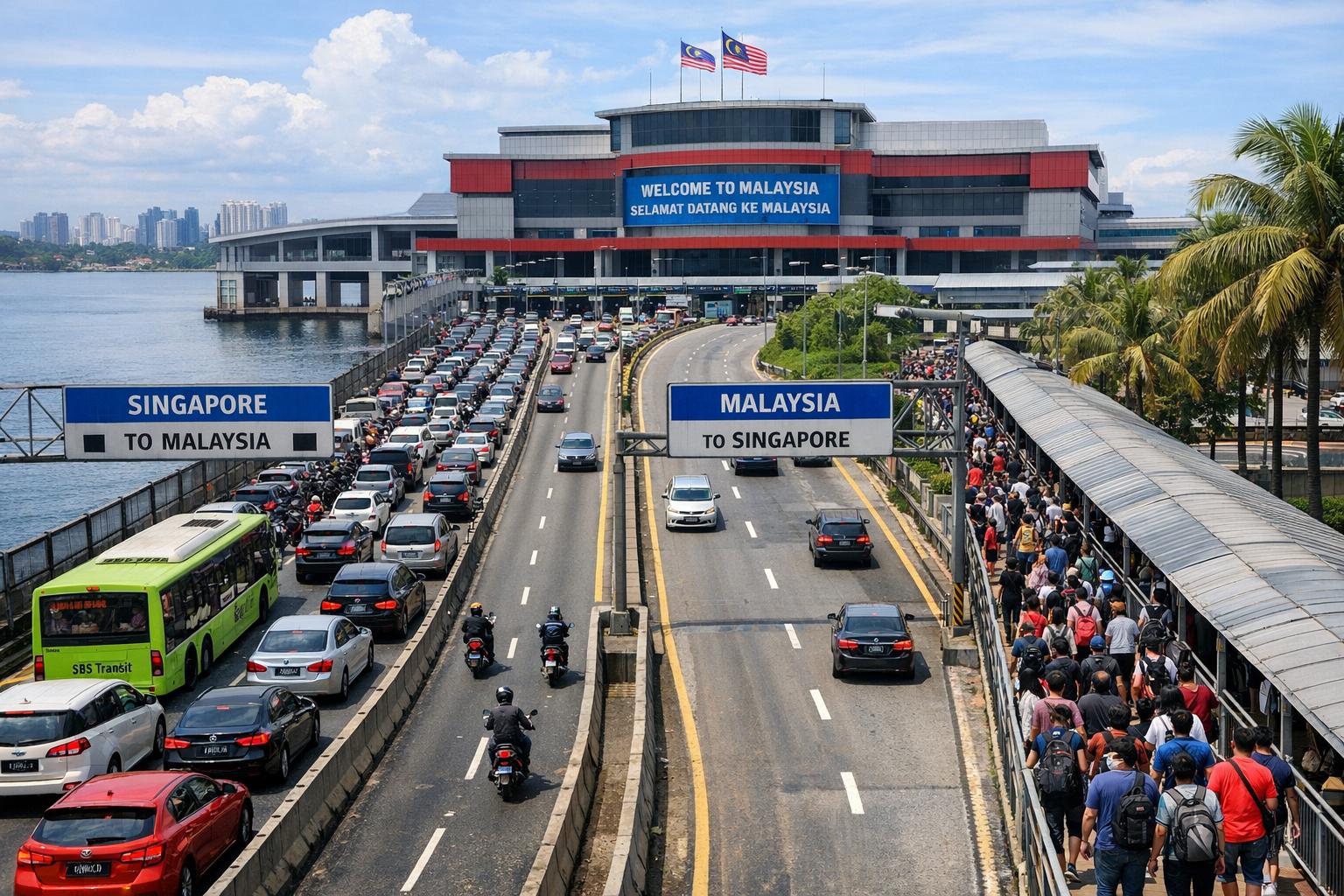
How Many Countries Can You Visit in 7–14 Days?
The number of countries you can comfortably visit depends on your trip length and how much time you want to spend in transit. As a general guide:
| Trip Length | Recommended Countries | Travel Pace |
|---|---|---|
| 7 days | 2 countries | Fast-paced |
| 10 days | 2–3 countries | Moderate |
| 14 days | 3 countries | More relaxed |
Although Southeast Asian countries are relatively close to each other, border crossings and transfers still take time. For a more enjoyable trip, it is usually better to spend more time in fewer destinations than rush through several countries.
Best 7-Day Southeast Asia Itinerary
Singapore + Malaysia
Singapore → Kuala Lumpur → Penang
This route is a practical introduction to Southeast Asia, combining modern cities, cultural attractions, and some of the region's best-known food destinations. The relatively short distances between stops also make it suitable for a 7-day trip.
| Destination | Suggested Time | Highlights |
|---|---|---|
| Singapore | 2–3 days | Marina Bay Sands, Gardens by the Bay, Chinatown, local food |
| Kuala Lumpur | 2 days | Petronas Twin Towers, Batu Caves, Merdeka Square |
| Penang | 2–3 days | George Town, Penang Hill, street food |
Best for: First-time Southeast Asia travelers, city sightseeing, food, and culture.
Best 10-Day Southeast Asia Itineraries
Route 1: Thailand + Laos
Bangkok → Chiang Mai → Luang Prabang
This route combines Thailand's energetic cities with the slower pace and cultural heritage of Laos. It is a good choice if you want temples, local culture, food, and nature without spending the entire trip moving between destinations.
| Destination | Suggested Time | Highlights |
|---|---|---|
| Bangkok | 3 days | Grand Palace, Wat Arun, street food, markets |
| Chiang Mai | 3 days | Old City, Wat Phra That Doi Suthep, night markets |
| Luang Prabang | 3–4 days | Kuang Si Falls, Mount Phousi, Old Town |
Best for: Culture, temples, food, and a slower travel pace.
Route 2: Vietnam + Cambodia
Hanoi → Ha Long Bay → Siem Reap → Ho Chi Minh City
This route combines Vietnam's historic cities and natural scenery with Cambodia's famous temples. It is a good option for travelers who want to experience two countries while keeping the itinerary focused on major cultural highlights.
| Destination | Suggested Time | Highlights |
|---|---|---|
| Hanoi | 2–3 days | Old Quarter, Hoan Kiem Lake, Temple of Literature |
| Ha Long Bay | 1–2 days | Limestone islands, boat cruise, caves |
| Siem Reap | 2–3 days | Angkor Wat, Bayon Temple, Ta Prohm |
| Ho Chi Minh City | 2–3 days | War Remnants Museum, Independence Palace, Ben Thanh Market |
Best for: History, culture, temples, food, and natural scenery.
Best 14-Day Southeast Asia Itineraries
Route 1: Thailand → Cambodia → Vietnam
Bangkok → Siem Reap → Phnom Penh → Ho Chi Minh City
With two weeks, you can connect three countries across mainland Southeast Asia while allowing enough time for major cultural and historical sites. This route is especially suitable for travelers who want to experience several countries without trying to cover the entire region.
| Destination | Suggested Time | Highlights |
|---|---|---|
| Bangkok | 3–4 days | Grand Palace, Wat Pho, Wat Arun, markets |
| Siem Reap | 3 days | Angkor Wat, Bayon Temple, Ta Prohm |
| Phnom Penh | 2–3 days | Royal Palace, National Museum, Wat Phnom |
| Ho Chi Minh City | 3–4 days | War Remnants Museum, Independence Palace, Ben Thanh Market |
Best for: History, culture, temples, and first-time multi-country travelers.
Route 2: Singapore → Indonesia → Malaysia
Singapore → Bali → Lombok → Kuala Lumpur
This route combines a modern Southeast Asian city with Indonesia's beaches and cultural attractions before finishing in Malaysia's capital. It offers a different pace from the mainland routes, with more time for beaches and relaxation.
| Destination | Suggested Time | Highlights |
|---|---|---|
| Singapore | 2–3 days | Marina Bay, Gardens by the Bay, Chinatown |
| Bali | 4 days | Ubud, Uluwatu, rice terraces, beaches |
| Lombok | 3 days | Kuta Beach, Mount Rinjani area, Gili Islands |
| Kuala Lumpur | 3–4 days | Petronas Twin Towers, Batu Caves, Bukit Bintang |
Best for: Beaches, nature, food, culture, and a more relaxed multi-country trip.
Staying Connected Across Southeast Asia
When your itinerary covers multiple countries, staying connected can be different from traveling within a single country. Here are three things to keep in mind:
- Your mobile network may change. Each country has its own mobile network operators. When you cross an international border, your phone needs to register with a supported network in the new destination.
- Your eSIM coverage may change. A country-specific eSIM may only provide service in the country it covers. For example, a Thailand-only eSIM may stop providing mobile data when you enter Malaysia or Cambodia.
- Your phone may need to reconnect to a new network. After crossing a border, your phone may take a moment to register with a supported network. If it does not reconnect automatically, you may need to check your mobile network or data settings.
For multi-country trips, using a plan that covers all your destinations can make it easier to stay connected without changing SIMs or purchasing a new data plan at every border.
Local SIM vs. Regional eSIM for Multi-Country Trips
For a multi-country trip, you can either purchase a local SIM or eSIM in each destination or use a regional eSIM that covers multiple countries. The better option depends on how many borders you plan to cross and how much setup you want to handle during the trip.
Local SIM vs. Regional eSIM — Multi-Country Comparison
For travelers crossing two or more borders, a regional eSIM can reduce the setup involved during the trip and provide a more consistent way to stay connected across destinations.
Why Choose ByteSIM for a Southeast Asia Multi-Country Trip?
For travelers visiting multiple destinations in Southeast Asia, ByteSIM offers several features that make cross-border connectivity easier:
- One eSIM across multiple destinations: The Asia-Pacific plan covers 15 destinations, including Singapore, Malaysia, Thailand, Indonesia, the Philippines, Vietnam, and Cambodia. You can keep the same eSIM throughout a multi-country trip instead of purchasing a new one at each border.
- Multiple network options in key destinations: In several Southeast Asian countries, the plan supports more than one local network. For example, Malaysia supports CelcomDigi, U Mobile, and Maxis, while Thailand supports AIS and True. This gives the eSIM more network options when available.
- 5G in supported destinations: The plan offers 5G/4G LTE connectivity, with 5G available in 13 of the 15 destinations, subject to local coverage and device compatibility.
- Flexible data and trip lengths: Plans are available with daily data, total data, or unlimited data options, with service periods ranging from 1 to 30 days. This makes it easier to match the plan to your itinerary and usage needs.
- Hotspot support: If you need to share your connection with a laptop, tablet, or travel companion, hotspot is supported on this plan.
- 24/7 human support: ByteSIM provides support through WhatsApp and email, with the product page stating that replies are available within five minutes.

Traveling across Southeast Asia?
Stay connected with ByteSIM Asia-Pacific eSIM — one plan, multiple countries.
Explore ByteSIM eSIM →FAQ
When should I install my regional eSIM?
You can usually install the eSIM before departure while connected to Wi-Fi. However, activation and service availability depend on the plan's terms and destination network, so check the activation instructions before installation.
Can I use a regional eSIM on any phone?
No. Your phone must support eSIM and be carrier-unlocked. Check your device's eSIM compatibility before purchasing, especially if you are unsure whether your phone supports travel eSIMs.
Do I need to install a new eSIM every time I cross a border?
Not necessarily. A regional eSIM can cover multiple supported countries, so you generally do not need to install a separate eSIM when moving between covered destinations.
Will my phone automatically switch networks in another country?
Usually, your phone will search for and register with an available supported network after you enter a new country. If it does not connect, you may need to check your mobile network settings or select a supported network manually.
Can I keep my home SIM while using a regional eSIM?
Yes, on phones that support dual SIM or eSIM functionality. You can keep your home SIM active while selecting the travel eSIM for mobile data.
© Southeast Asia Multi-Country Travel Guide — Plan your trip and stay connected.