
• English
  • Español
  • Français
  • 日本語
  • 한국인
  • 中文(简体)
  • 中文(繁體)
  • 올란드 제도(USD $)
  • 알바니아(USD $)
  • 안도라(USD $)
  • 호주(USD $)
  • 오스트리아(USD $)
  • 벨라루스(USD $)
  • 벨기에(USD $)
  • 보스니아 헤르체고비나(USD $)
  • 불가리아(USD $)
  • 캐나다(USD $)
  • 중국(USD $)
  • 크로아티아(USD $)
  • 키프로스(USD $)
  • 체코(USD $)
  • 덴마크(USD $)
  • 에스토니아(USD $)
  • 페로 제도(USD $)
  • 핀란드(USD $)
  • 프랑스(USD $)
  • 독일(USD $)
  • 지브롤터(USD $)
  • 그리스(USD $)
  • 건지(USD $)
  • 홍콩 특별행정구(USD $)
  • 헝가리(USD $)
  • 아이슬란드(USD $)
  • 아일랜드(USD $)
  • 맨 섬(USD $)
  • 이탈리아(USD $)
  • 일본(USD $)
  • 저지(USD $)
  • 라트비아(USD $)
  • 리히텐슈타인(USD $)
  • 리투아니아(USD $)
  • 룩셈부르크(USD $)
  • 마카오 특별행정구(USD $)
  • 북 마케도니아(USD $)
  • 몰타(USD $)
  • 몰도바(USD $)
  • 모나코(USD $)
  • 몬테네그로(USD $)
  • 네덜란드(USD $)
  • 노르웨이(USD $)
  • 폴란드(USD $)
  • 포르투갈(USD $)
  • 루마니아(USD $)
  • 러시아(USD $)
  • 산 마리노(USD $)
  • 세르비아(USD $)
  • 싱가포르(USD $)
  • 슬로바키아(USD $)
  • 슬로베니아(USD $)
  • 스페인(USD $)
  • 스발바르 & 얀 마옌(USD $)
  • 스웨덴(USD $)
  • 스위스(USD $)
  • 대만(USD $)
  • 우크라이나(USD $)
  • 영국(USD $)
  • 미국(USD $)
  • 바티칸 시국(USD $)

상관 화폐를 찾지 못했습니다

끄기

/ /

How to Stay Connected Across USA, Canada and Mexico (2026 World Cup Travel Guide)

May 18,2026 | Milo

💡 Key Takeaways

  • 2026 World Cup spans the USA, Canada, and Mexico — frequent cross-border travel will be the new normal for many fans.
  • Constantly swapping physical SIM cards or relying on expensive carrier roaming can quickly become frustrating.
  • Installing a 3-in-1 North America eSIM before your trip makes it much easier to stay connected across all three countries.

When 2026 FIFA World Cup announced it would be hosted across the USA, Canada, and Mexico, my first reaction was: “This is going to be amazing.”

My second reaction?  “Wait…how am I supposed to survive the logistics?”

This isn’t like flying into one country, watching a few matches, and heading home.

You could realistically watch a match in Los Angeles, fly to Mexico City three days later, then head to Toronto for the knockout rounds.

That means dealing with:

  • multiple flights
  • border crossings
  • stadium ticket apps
  • hotel check-ins
  • ride-sharing apps
  • constant navigation
  • and somehow keeping your phone connected the entire time

And honestly? The biggest hidden problem isn’t flights. It’s mobile data.

Why This World Cup Will Be a Travel Nightmare

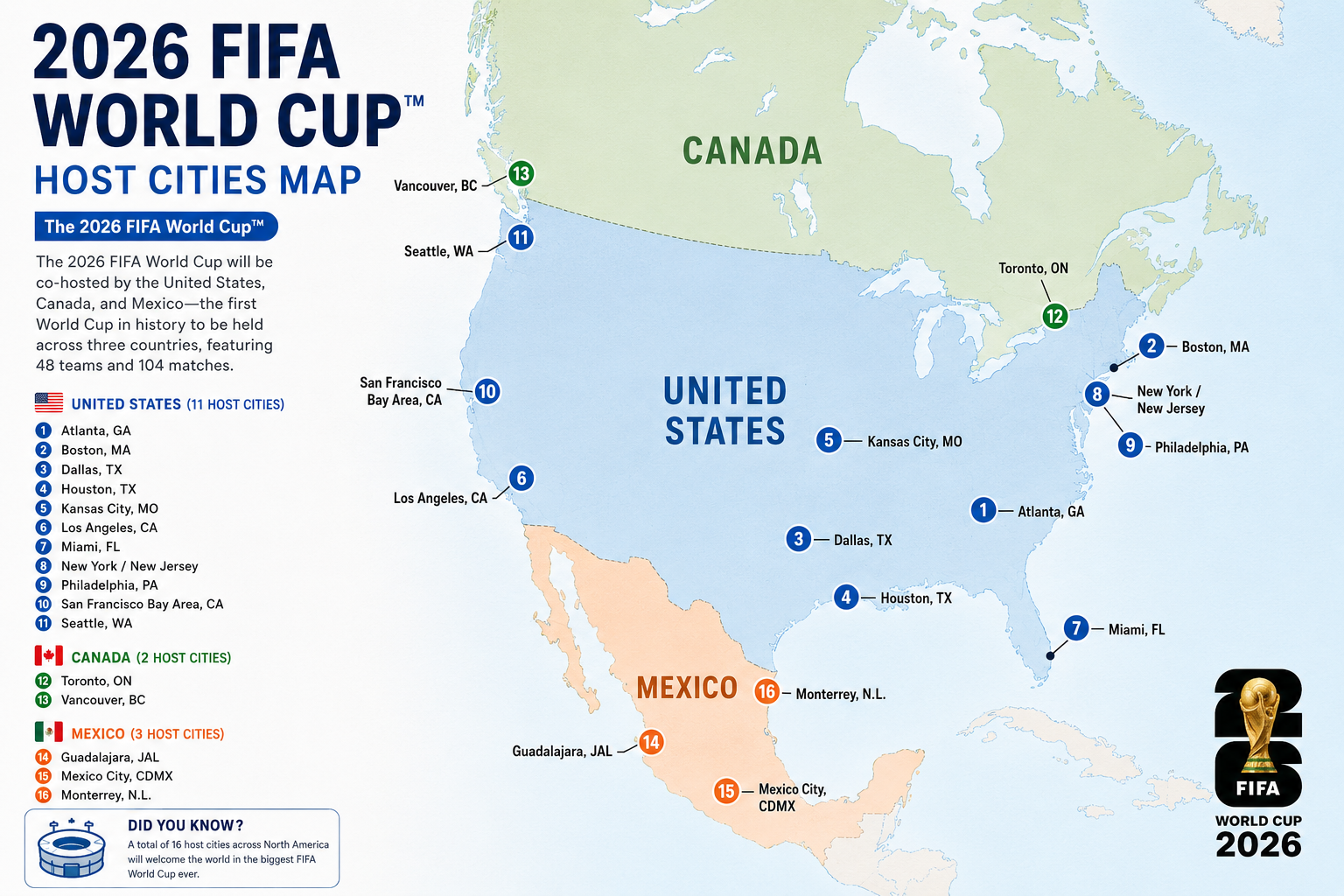
As we all know, this is the first time in World Cup history that three nations are co-hosting. The geographic footprint is absolutely massive! This isn't your standard "stay in one city and take a train" tournament; it is a logistical marathon.

2026 FIFA World Cup host cities map showing USA, Canada, and Mexico travel routes

Unless your team gets incredibly lucky with scheduling, chances are you’ll be hopping between countries. And flights aren’t exactly short either.

NYC → Toronto → ~1.5 hours
LA → Mexico City → ~4 hours
Vancouver → Dallas → ~4+ hours

Picture your crazy group stage itinerary: On Tuesday, you're grabbing coffee near Times Square in New York before a match. By Friday, you're flying up to Toronto to soak in the Canadian football fever. Come Monday, you could be in Mexico City crushing authentic street tacos before a do-or-die elimination game. This kind of high-frequency border hopping will test your stamina, your budget, and—most crucially—your mobile connectivity.

How to Travel Between USA, Canada, and Mexico for Matches

One thing many fans underestimate about the 2026 World Cup is just how far apart the host cities are. You might watch a match in New York, then fly to Toronto, then head to Mexico City days later. That means dealing with flights, trains, buses, and border crossings.

✈️

Flights: Fastest for Long Distances

Flying will be the most practical option for most routes.

  • Dallas → Monterrey: 1.5–2 hrs ($80–$220)
  • Los Angeles → Mexico City: 4 hrs ($150–$400)
  • New York → Toronto: 1.5 hrs ($120–$350)
  • Vancouver → Dallas: 4–5 hrs ($250–$600)
🚆

Trains & Buses: Best for Short Border Routes

Not every route needs a flight.

  • Seattle → Vancouver via Amtrak (~4 hrs)
  • San Diego → Tijuana via Greyhound
  • Use CBX for direct access to Tijuana Airport
🛂

Border Crossings: Don’t Ignore This

Many travelers underestimate border logistics.

📍 Sample Match Route + Estimated Costs

New York → Toronto → Mexico City

Route Transport Estimated Cost
NYC → Toronto Flight $120–$350
Toronto → Mexico City Flight $300–$700
Airport Transfers Uber / Train $50–$150
Total $470–$1,200+

Why Your Regular SIM Card Might Ruin Your Trip

This is the part most people underestimate when planning a multi-country 2026 FIFA World Cup trip.

You spend weeks comparing flights, hotels, and match tickets… but completely forget what happens when you cross from United States to Canada or Mexico and your phone suddenly stops working.

And yes—it happens more often than people think.

🚍

Border Crossing Blackout

You're taking a bus from San Diego to Tijuana. The moment you cross the border, your phone shows "No Service."

  • No WhatsApp messages
  • No Google Maps
  • No Airbnb check-in details
  • No ride booking apps
🎟️

Stadium QR Ticket Panic

You arrive at a packed World Cup stadium, but your digital ticket won’t load.

  • QR code won't refresh
  • Stadium Wi-Fi is overloaded
  • Thousands of fans waiting
  • You risk missing kickoff

Bypass the stadium network collapse with ByteSIM premium AT&T and Rogers 5G.

✈️

Airport Transit Nightmare

You land in Mexico City or Toronto exhausted and need internet immediately.

  • Can't book Uber
  • Can't contact hotel
  • Can't check directions
  • Airport Wi-Fi fails

Be careful of the airport SIM cards scams.

Roaming Fees vs. Local SIM vs. eSIM

Since data is a matter of survival, which option should you choose? I've put together a quick comparison:

Option Cost Convenience Coverage
Carrier Roaming High ($10-$15/Day) Great (Auto-connects) Medium (Often throttled overseas)
Local Physical SIM Medium Poor (Needs swapping in every country) Single Country Only
ByteSIM eSIM Best (High Value) Great (QR Code Install) Multi-Country (3-in-1)

The table makes it clear: for a multi-country trip, roaming is a rip-off, swapping physical SIM cards at every border is a headache, and eSIM is the ultimate winner.

Why I’m Using One eSIM for All Three Countries

One eSIM for Three Countries

Crossing borders shouldn't mean losing your connection. Skip the hassle of swapping physical SIMs or paying insane roaming fees. Equip your phone with a single USA Mexico Canada eSIM to keep online seamlessly from New York to Mexico City.

Get Your 3-in-1 eSIM Now
ByteSIM North America 3-in-1 World Cup eSIM

This is exactly why I am urging everyone to get a usa mexico canada esim before they fly out. Products like the ByteSIM multi-country eSIM are literal lifesavers for football fans.

Instead of buying:

one US SIM
one Canada SIM
one Mexico SIM

I’d rather install one eSIM before flying and forget about it.

That means:

✅ one QR activation
✅ no swapping physical SIM cards
✅ works across borders
✅ keep your primary number active
✅ no airport kiosk stress

My Essential World Cup Travel Apps

Your phone basically becomes your survival kit during the 2026 World Cup—from loading match tickets to booking rides after the game. These are the apps I’d download before flying.

🎟️

FIFA Official App

For digital tickets, match updates, and stadium info.

🗺️

Google Maps

Essential for navigating unfamiliar cities and public transit.

🚗

Uber / DiDi

Uber works well in the U.S. & Canada, while DiDi is often cheaper in Mexico.

Want the full breakdown of ticket apps, ride apps, food delivery apps, and hidden travel tools?

Read the full World Cup app guide →

Final Checklist Before You Fly

Before chasing matches across the USA, Canada, and Mexico, make sure you’ve handled the essentials. Trust me—forgetting one of these can ruin your trip faster than a delayed flight.

논평

성명
이메일
논평