
Apple Watch eSIM Precio: Planes mensuales, costos de operadores y alternativas más baratas
Apple Watch eSIM generalmente cuesta alrededor de $5–$15 por mes, dependiendo de tu operador móvil y si eliges un plan de compartición de número o un plan celular independiente.
En la mayoría de los casos, los usuarios necesitan pagar una tarifa mensual adicional además de su plan de iPhone para activar las funciones celulares del Apple Watch. Por eso, el costo total de propiedad varía entre operadores y países.
📌 Lo que cubre esta guía
● Resumen del precio mensual del Apple Watch eSIM
● Costos de planes celulares específicos de operadores
● Diferentes tipos de planes para Apple Watch eSIM
● Si el Apple Watch eSIM vale el precio
● Alternativas más baratas a los planes de operadores
Resumen de precios del Apple Watch eSIM
El precio del Apple Watch eSIM se basa principalmente en cargos mensuales de operadores, no en el reloj en sí. En la mayoría de las regiones, el costo es relativamente bajo, pero siempre es una tarifa adicional sobre tu plan móvil existente.
| Región | Precio mensual promedio | Notas |
|---|---|---|
| Estados Unidos | $5–$10 | A menudo se añade al plan telefónico |
| Reino Unido | £5–£10 | Descuento con planes de paquete |
| Europa | €5–€10 | Varía según el operador |
| Asia | $5–$12 | Algunos operadores incluyen pruebas gratuitas |
¿Qué afecta el precio del Apple Watch eSIM? Política del operador, tipo de plan (compartición de número vs independiente), contratos agrupados y diferencias de precios por región. La mayoría de los usuarios no se da cuenta de que el Apple Watch eSIM no es un servicio de precio fijo global.
Comparte el mismo número que el iPhone
Más común, costo más bajo: $5–$10/mes
Número separado para el Apple Watch
Menos común, costo más alto: $10–$15/mes
Si solo usas el Apple Watch con tu iPhone cerca, es posible que no necesites un plan celular en absoluto.
Comparación de costos de operadores
En EE. UU., la mayoría de los operadores importantes cobran alrededor de $10/mes por reloj. Los proveedores del Reino Unido y Europa varían entre £5–£10 o €5–€10.
| Operador | Precio mensual | Región |
|---|---|---|
| Verizon | ~$10 | EE. UU. |
| AT&T | ~$10 | EE. UU. |
| T-Mobile | ~$10 | EE. UU. |
| EE | £7–£10 | Reino Unido |
| Vodafone | £5–£7 | Reino Unido |
| Alemania (promedio) | €5–€10 | Europa |
¿Por qué los precios de los operadores son casi los mismos? El Apple Watch eSIM es un servicio adicional, y Apple estandariza la integración celular entre proveedores.
Tipos de planes celulares del Apple Watch
- Compartición de número – comparte tu número de iPhone, experiencia fluida, típico $5–$10/mes.
- Plan independiente – le da al Apple Watch su propio número, costo ligeramente más alto ($10–$15/mes).
¿Vale la pena el Apple Watch eSIM?
Si a menudo dejas tu teléfono atrás (correr, gimnasio, recados rápidos), la función celular brinda verdadera independencia. Sin embargo, si tu iPhone siempre está contigo, la tarifa mensual de $10 se suma a $120 por año. Evalúa tu uso antes de comprometerte.
Alternativas más baratas explicadas
Para los usuarios que rara vez utilizan celular independiente, las opciones flexibles eSIM ofrecen un modelo de pago por uso.
Sin contratos mensuales, solo pagas por los datos que realmente usas. Estas soluciones son ideales para viajeros y usuarios ligeros.
Paga solo por los datos, mantén tu Apple Watch conectado sin una tarifa mensual.
👉 Compra planes de Apple Watch eSIMActivación QR • Funciona con modelos de Apple Watch celulares
¿Quién debería quedarse con los planes de operadores? Usuarios independientes frecuentes, aquellos que desean una integración completa del número.
¿Quién debería considerar alternativas más baratas? Usuarios ocasionales, viajeros o personas que desean evitar tarifas mensuales recurrentes.
Configuración y activación del Apple Watch eSIM
La activación se realiza a través de la aplicación Watch en tu iPhone. El proceso es rápido y guiado por el operador.
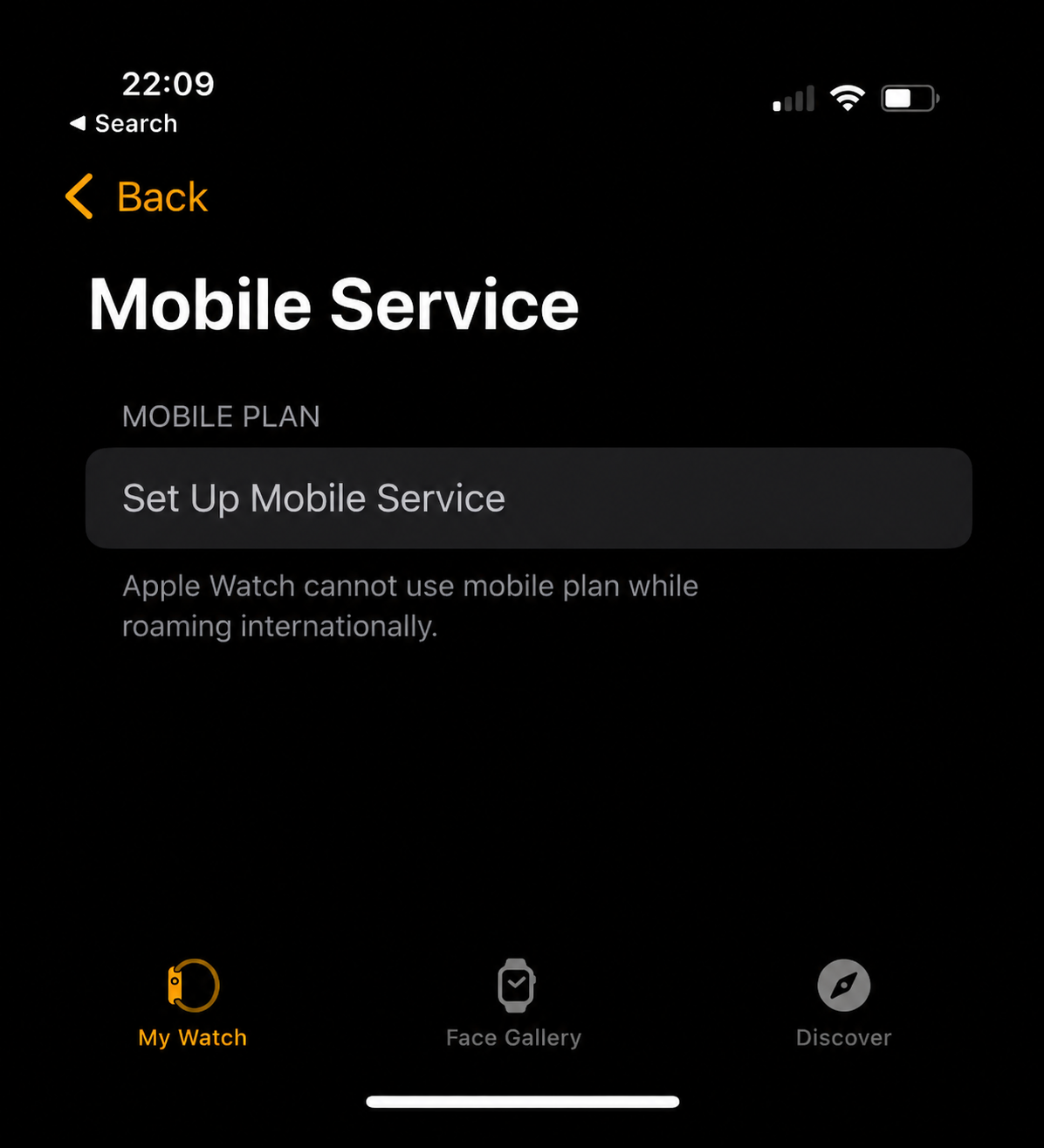
- Paso 1: Asegúrate de que Apple Watch sea compatible con celular (Serie 3+ Celular / SE).
- Paso 2: Abre la aplicación Watch en el iPhone → Ve a Celular → Toca Configurar Celular.
- Paso 3: Selecciona tu plan de operador (compartición de número o independiente).
- Paso 4: Provisionar eSIM – generalmente toma 2–3 minutos.
- Paso 5: Prueba apagando Bluetooth y tratando de hacer una llamada o usar datos.
FAQ: Precio y uso del Apple Watch eSIM
$5–$15 por mes dependiendo del operador, con la mayoría de los usuarios pagando ~$10/mes como un complemento.
No. La configuración requiere un iPhone. Después de la activación, algunas funciones funcionan de forma independiente, pero el emparejamiento inicial necesita un iPhone.
No hay función de hotspot en el Apple Watch. Puede usar su propia conexión celular, pero no puede compartir internet con otros dispositivos.
No. La disponibilidad depende de los acuerdos con los operadores: ampliamente soportado en EE. UU., Reino Unido, Europa, pero no en todos los países.